comment 0

Dawn on the Amazon

On finding hope & inspiration in an era of environmental devastation

Global carbon dioxide in atmosphere passes milestone level
Climate warming greenhouse gas reaches 400 parts per million for the first time in human history

– The Guardian, May 10, 2013

I’m in the middle of a five-week trip to the Peruvian Amazon, working with indigenous communities who have suffered from 40 years of contamination as a result of oil drilling on their lands. Digital Democracy is working directly with these communities to help them better use technology to share what is happening to their rivers and advocate for the necessary clean-up efforts.

This work is part of something much larger. Digital Democracy’s program, Remote Access, is, at its core, about renegotiating power structures, creating tools that allow historically oppressed, marginalized groups to tell their own stories about what is happening to them, stories of environmental and human rights abuses that all too often occur far away from the watchful eye of 24-hour-news-cycles and ubiquitous wi-fi connections.

The work here in Peru is specific and important. It’s about rivers I can name – the Pastaza, the Corientes, the Tigre – and the people who travel up and down them, documenting spills that have contaminated specific fields, water supplies and hunting grounds.

But oil drilling – whether in the Peruvian Amazon or elsewhere – is also of universal concern and consequence. On Thursday, May 9th, the amount of carbon dioxide in the atmosphere – referred to as PPM (parts per million) exceeded 400  – a number that hasn’t been seen on earth for several million years. Meanwhile, Time, working closely with Google Earth, released a website with some of the best multi-media reporting I’ve ever seen. The TimeLapse project culls through the past three decades of high-res LandSat imagery to expose a powerful picture of how humans are changing the environment.

The situation is dire. To claim otherwise would be false. And yet, I want to get up every day and embrace life. The following two journal entries, handwritten over the course of the past week, represent my own internal struggle in the face of this global challenge.

Sunday May 5, 2013. 5:30am. Iquitos, Peru:

I see it so clearly.

Historic opportunities: The bottom-up work of the monitors finally being recognized. The need to keep pushing and pressuring for the full extent of the environmental damage to be recognized by the State. The role that Dd can play – further building the capacity of groups fighting – quite literally – for their lives. The key role of getting information from remote places to headquarters, to partners, to government. The work has already begun, we are here to strengthen it, amplify it exponentially.

Thinking of Aurelio’s powerful story on Friday. When he began, the work was dispiriting. Many of his own community members saw no choice but to work with oil companies. Now, resistance is growing – the communities are uniting. Just as it is in the great plains of North America, along the Keystone Pipeline, the Tar Sands of Canada.

And it is easy – all too easy – to be cynical and lament that, despite this resistance, business as usual is inevitable. That oil drilling will continue here, in the Western Amazon, in Western Canada, in the deserts of Saudi Arabia, in the Niger Delta, ad infinitum.

But to that I say: Things are only impossible until they are not.

There is no physical law binding oil companies to extract every last drop of crude from the earth. It is not a given like gravity or the turning of the earth around the sun.

No. Oil extraction in the Amazon, climate denial, oppression of indigenous people – these are strong forces, but they are not givens. They can change. The future is always built by people who believe in their vision, aided by those who wish to support their vision, and also by those who disagree but who do nothing because they believe in the false premise that they are powerless to stop it.

The work of Dd these past four years has taught me that seemingly impossible things can become possible. Studying history has taught me that nothing is inevitable, change can hang on the edge of a blade. The protestations – or acquiescence – of the marginalized masses can shift the balance, or lay down at the feet of the status quo.

Now is a time for rising up, for fighting back. The window of time is ever narrowing, as carbon emissions soar and the rainforests which store so much carbon – not to mention biological and cultural diversity – are being logged, clear cut, mined and drilled for oil. But there is growing recognition that things must change, as even The Economist acknowledges that oil companies’ reserves must not be drilled,* and more and more people rise up in direct action, nonviolent protest & acts of civil disobedience.

I have a part to play in all of this, and I have been building for it all my life. For Dd too, the successes we have built up to now have prepared us for this – a bigger challenge, a more ambitious task, a role we are perfectly suited to play.

This is the kind of struggle where it is worth going all in. For the sake of our partners, and their right to determine their own futures – a right that has been denied for too long to too many. For Digital Democracy, this is about alignment with something larger. Everywhere, rights are in need of defending. We are focused, for now, on developing the tools which stand the possibility to empower the largest number of people. We are focused on fortifying activists from marginalized groups with the capacity, skills and tools they need to fight for the impossible – and win. We may not get it right, but we are devoted to try our best in this endeavor. Why?

For the sake children being born, for people living on islands, for residents of New York City, for all people, everywhere. For the birds and mammals, fish and reptiles, insects, plants and trees of a world where, although species are threatened, ecosystems are still teeming with life. It is not too late, but it will take all our efforts to shift the momentum and “inevitability” of history, and the dawn of a new era of relationships – with ourselves, and the planet at large.

“The future belongs to those who believe in the beauty of their dreams.” – Eleanor Roosevelt

*Unburnable Fuel. Either governments are not serious about climate change or firms are overvalued. The Economist. May 4th, 2013.

Sunday May 12, 2013. 7am. Tarapoto, Peru:

I’m writing from the tropical hills of Tarapoto, a gateway to the vast network of rivers and smaller tributaries of the Upper Amazon. In the past week I’ve gone from the rainforest to the Peruvian capital and back to the rainforest, accompanying a delegation of indigenous leaders and community-based environmental monitors in their first meetings with Congress, the Prime Minister & President in Lima. These meetings won’t change everything, but they are a start – they represent a shift in Peruvian policy, an apology from the government for the environmental damage. And that is important.
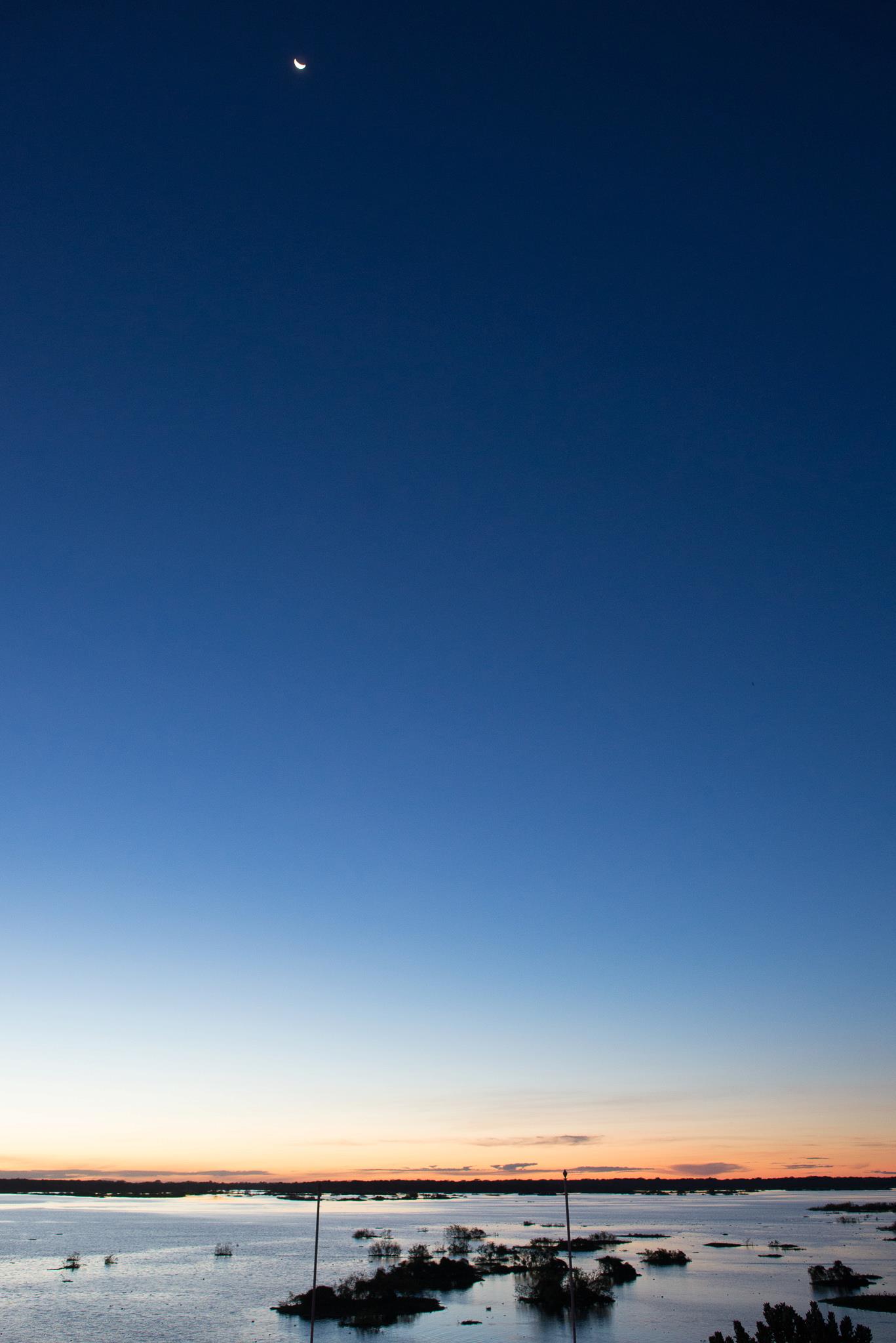
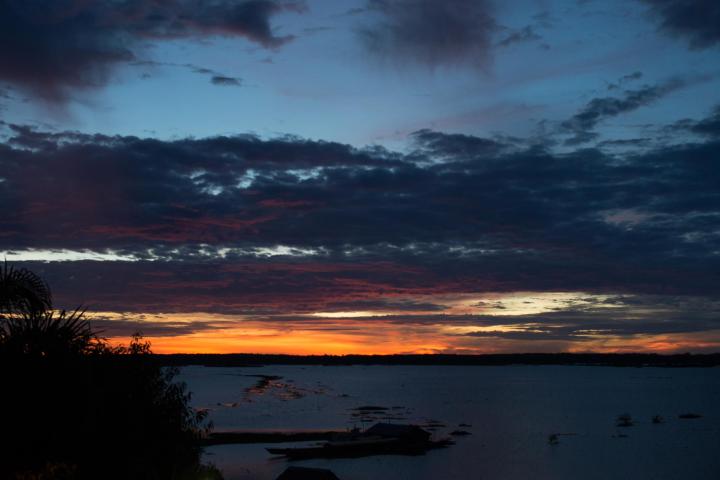
473414_10151664671287704_1804573429_oFor the past week I haven’t been able to shake an image & the idea it represents – that of the dawn that Gregor & I witnessed last weekend in Iquitos. Morning’s first rays of light, shining over the Amazon River with the waning crescent moon overhead. It was an important moment to witness, but I think it is more than that. Dawn on the Amazon – it is a powerful metaphorical message.

Sunrise, the moment light light breaks the long dark of night. Sunrise, the promise of a new beginning. Sunrise, the promise of a new day.

For the past week I have been pondering this idea of sunrise in the context of working here in the Amazon, where decades of oil drilling have taken a massive toll on the communities for whom the rivers are a lifeline. And it is an honor to be here, thanks to the trust Gregor has built over the past decade, working directly with the communities who are documenting the impacts of oil contamination,* creating maps and reports, and using these to advocate for clean-up of existing spills – and a stop to further drilling. In this context, the sunrise on the Amazon represents this small window we have to change course – not just here in the Amazon, but throughout a world that is addicted to consumption of fossil fuels and other commodities, addictions that stand in direct competition to a healthy balance of life on planet Earth.

It is fitting to reflect on this today, Mother’s Day at home in the States & here in Peru. I’m thinking of my own mom, my grandmother, and my many friends who are new or soon-to-be parents, their babies, their toddlers, my own goddaughters. What does the future hold for them? We have more knowledge than ever before about precisely the impact of unsustainable consumption on the planet. Just Thursday, we crossed the 400 ppm threshold for carbon. I read the news and I think about the world these babies are inheriting. The prospect is daunting, almost overwhelmingly sad. Information alone can almost do the opposite of inspiring action – it can induce paralysis.

And that is why I am writing. To strengthen the resolve in my own heart to address this mighty challenge with action. To seek words that will forge alliances, to build community with others who value life on this earth. I’m writing to combat paralysis, because there is no den of denial strong or large enough to protect me and those I love from the consequences of climate change. Because as I watched dawn emerge over the mighty Amazon River I realized – it’s not over yet. It’s daunting, but it’s not done. Great hope and possibility exists even in the face of enormous challenges. And great happiness and fulfillment also lie in moving toward the type of life I want to live – one with less things but deeper connections. Less of everything fueled by oil, more by wind, sun and footpower. A more just and equitable world.

* Check out the important work of PUINAMUDT – Observatorio Petrolero de la Amazonía Norte

comment 0

Offline in the Amazon

For the next five weeks, I will be in Peru with my colleague Gregor getting Digital Democracy’s new Remote Access program off the ground.

My mom called me a few days ago to ask how to contact me on the trip. I joked – smoke signals! No, really. Although some of the time we’ll have internet or a mobile connection, the whole point of our program is to support the efforts of indigenous groups who are monitoring the environmental impacts of oil drilling in areas that are completely off-the grid. In other words, there will be no access to phone, internet or even electricity in much of the areas where we’ll be traveling.

We planned our trip around some important assemblies that are taking place with some of our indigenous partners, as well as a research delegation from the EU. However, given how things work in the Amazon, our schedule will surely change in multiple ways. I thought I’d post our original plan, and update it with how many times the plans change.

Original plan:
Thu Apr 25: Travel to Peru
Fri Apr 26: Travel to Iquitos
Sat Apr 27 – Mon Apr 29: Meetings in Iquitos with monitoring programs
Tue Apr 30: Travel to the Temple (1.5 hours from Iquitos).
Tue Apr 30 – Thu May 2: Meetings at the Temple
Thu May 2 (early morning): Return to Iquitos
Thu May 2-3: Travel upriver via Corrientes river to Andoas (2 days)
Sat May 4: Meetings
Sun May 5: Gregor travel downriver to San Lorenzo
Mon May 6: Gregor flight San Lorenzo – Wisum (Achuar territory)
Mon May 6-13: Emily & Martí monitoring visits in Corrientes
Sun May 12: Gregor travels downriver from Wisum to mouth of Huitoyacu
Mon May 13: Gregor travels up Pastaza to Andoas, meets with Emily & Martí
Tue May 14-19: Monitoring visits around Andoas
Mon May 20: Travel downriver to San Lorenzo
Tue May 21 – 26: Working with monitors and monitoring team including workshop in San Lorenzo
Mon May 27: Travel San Lorenzo – Lima (Leave 6am, arrive in Lima 11pm if all goes well)
Tue May 38: Evening flight Lima – US

Revised Apr 26 – Extra day in Lima & Gregor’s departure from Iquitos
Fri Apr 26: Meetings in Lima
Sat Apr 27 – Mon Apr 29: Travel to Iquitos, meetings in Iquitos with monitoring programs
Thu May 2- Sat May 4: Gregor Meetings in Iquitos
Sun May 5: Gregor travel downriver to Apulco
Mon May 6: Gregor flight Apulco – Wisum (Achuar territory)

Revised April 29 – Emily going to Lima with delegation
Thu May 2- Sat May 4: Emily & Gregor Meetings in Iquitos
Sun May 5: Emily flight to Lima
Mon May 6 – Wed May 8: Emily accompanying monitors to meetings with Congress
Wed May 8: Emily flight to Andoas
Thu May 9-13: Emily & Martí monitoring visits in Corrientes

Revised May 2 – Emily & Gregor travel together to Andoas
Wed May 8 – Thu May 9: Emily travel Lima to San Lorenzo
Mon May 13: Emily & Gregor travel from San Lorenzo to Andoas

Revised May 9
Sat May 11: Emily fly Lima – Tarapoto
Mon May 13: Emily & Gregor travel to San Lorenzo, meet in San Lorenzo & travel to Andoas

While I’m traveling, I may not be able to respond very quickly to messages, but I will update my twitter feed as possible. Even if I’m slow to respond, I’d love to hear from you during my journeys!

comment 0

A visit to Honeymoon Farm

This weekend I traveled to St. Louis to speak at Clinton Global Initiative University. The last time I was in St. Louis was October 2011, when I flew to St. Louis to attend my friends’ Lara and Steve’s wedding in Carbondale, Illinois. I’ll never forget the night – it was a full moon, and so many of my favorite people were there. Returning to St. Louis again, I decided to revisit Lara & Steve on the land where they were married, which they’ve been turning into a farm over the past 8 months. And boy, am I glad I did!

Honeymoon Farm is their labor of love, a place where they are working to revitalize the land and humanely raise animals. The land has been part of Steve’s family for generations, and I was so inspired to see the thoughtful and heart-centered approach they’re taking to cultivating it.

Here’s some of what I helped with this weekend:

  • Moved the chickens from an inside roost to a temporary outside shelter
  • Fed the pigs whey and rubbed their bellies
  • Helped the goats reach high branches
  • Picked ticks off of various animals
  • Tried to help train Athena the giant puppy
  • Talked about permaculture and biodynamic farming
  • Made yummy meals and hung out with a happy baby

I also took a lot of photos for Lara & Steve to use. Here’s the blog post Lara wrote about my visit, with lots of photos!

comment 0

Under the Glacier

Ten years ago I picked up Haldor Laxness’ book Under the Glacier, a superb (and absurd) piece of literature that explores topics of religion, spirituality, and the clash of modernity with tradition at Snæfellsjökull, the Snæfells glacier on Iceland’s western peninsula.

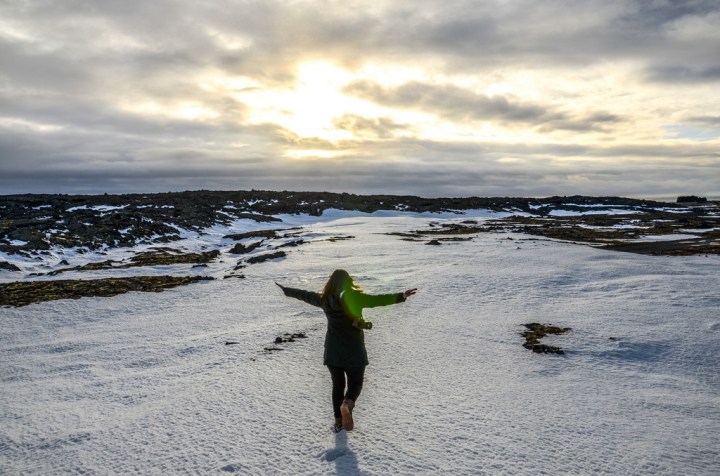
I think it’s in no small part thanks to Laxness’ gem of a book that I found my way to Iceland earlier this month, traveling with my dear friend Mr. Andrew Frist to celebrate our 30th birthdays, and two decades of friendship.

One of these days I’ll get around to posting more photos … in the meantime, check out Drew’s images of our trip.

comment 0

Mentor, role model, friend: Story of a Tenessee Chaplain

Mentor, role model, friend: Story of a Tenessee Chaplain

Some days the world looks dark – not because the darkness outweighs the light, but because the task of healing the world is not easy, the problems we face are complex & myriad.

One one of those days a few weeks ago, when I struggled mightily with this concern – how do I best carry forward my part? – I called my old friend, guide & mentor, Joe Eldridge. For fifteen years he has served as University Chaplain at American University, my alma mater. When I was in college I was fortunate enough to work directly for him, as one of the faciliators in the office of Community Action & Social Justice (CASJ), which was then under his umbrella.

On that day a few weeks ago, Joe gave me wise advice, just what I needed to hear to keep forging forward, even in those moments of uncertainty. And he told me this quote, from the Talmud:

‎”It is not incumbent upon you to complete the work, but neither are you at liberty to desist from it.”

Read this wonderful article on Joe’s life story, from his boyhood in the Smoky Mountains to human rights work in Chile to the incredible moral voice & passion for students which he brings to American University.

comment 0

Day 3: Daffodils by Lorna Dee Cervantes

Yesterday evening I read a poem to my dear friend Simran Dua, a truly lovely human being. She’s mid-way through a move from NYC to New Haven, where she’ll be attending Yale School of Management in the fall, and all I can say is that they are lucky to have her, and I’m lucky that New Haven is a short train ride from the city.

Simran is one of those friends who always makes you smile, whose positive energy radiates far beyond her physical presence, whose warmth is so palpable that I associate the color yellow with her. So I chose this poem, Daffodils, by the excellent poet Lorna Dee Cervantes.

Daffodils
Verde, que te quiero verde. – Federico Garcia Lorca
It is true–I love
the daffodil, her succulent
radiation. All things yellow
are good, the Pueblo people say.
You are blue corn, the color
of the north vein that travels your thigh.
You are blue, the color of new dawn
when the pendulums of the earth desist,
when your love rises from her bed of stones,
and desire, desire’s the sleepwalk of the beast.

I want it–it is true–a stalk
of the wheat that grows on your breath-tomb,
which covers your bones, fine as the long
nails that girdle this flower. Green
que te quiero verde and the magic
of fingers digging their way into life,
leaves gone yellow from winter on the willow
tree. My branches are the arms that hold,
my hands complete the river’s chore.

And it’s true, I gather love
as others gather breath for tears
and I love the golden light
that weighs upon the petals of narcissus. I love
your cobalt skies, the lightness of air
you carry in your fists. You hold your head
as a daffodil regales in the sun. Let me be
summer for you, past the profusion of
weeds I once was when my brown soul
huddled in her winter grave of girlish earth.

– Lorna Dee Cervantes

When I finished the poem, Sim described some of the imagery it conjured in her mind – yellow, green, fields of daffodils, of roots taking hold and growing in their depth. She urged me to keep calling as she makes this life transition, and we joked that poetry can be as nourishing on our mutual life journeys as water might be to one traveling through a desert.

comment 0

Day 2: Opposing Forces by Sun Ra

Yesterday morning I used skype credit to place a call to my friend Alex Eble, who is 12 time zones ahead of me, doing research in China this summer for his PhD in Economics. When I reached him, he told me he was in a village he had first visited 9 years ago!

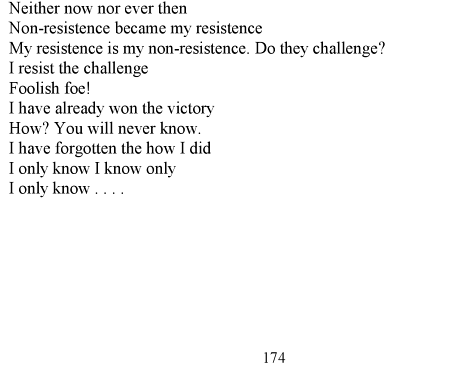
Alex isn’t able to top up phone credit til he is back from the rural area so we couldn’t talk for long, but we caught up briefly and then I read him a poem, “Opposing Forces,” from This Planet is Doomed: The Science Fiction Poetry of Sun Ra, a collection I recently picked up at the Strand.
If you’re not familiar with Sun Ra, you should be. Jazz composer, musician, bandleader, conscientious objector, filmmaker, “Afrofuturist,” philosopher & poet. The collection of poems is permeated with far out wisdom & some really big picture thinking.

I couldn’t find the full poem online, but there’s an earlier version of the poem (formerly titled “Foolish Foe”) on google books. Screenshots below.

I had so much fun reading the poem to Alex I ended up reading it to another friend yesterday evening before I went to bed. I have a feeling that might be the biggest challenge of this project … once I start reading poetry, I don’t want to stop!

comment 0

Day 1: Midsummer by Derek Walcott

Yesterday began the #BedtimePoems experiment, with a lovely conversation with Brian, a friend from college. Despite keeping up with one another via Facebook and the occasional email, it’s actually been probably eight or so years since we spoke in real-time!

We caught up briefly on life transitions and then turned our conversation to poetry. Brian dutifully answered some questions I prepared about his relationship to poetry, and gave me some good ideas for other data points I should ask for the project. He also made me laugh when he told me, “honestly, I don’t think I’ve ever seen someone on Facebook say anything about poetry, and I thought ‘that’s something I want to be part of!'”

Then, as I sat on a park bench at the edge of Central Park West & Columbus Circle, I read him the below poem, Midsummer, by the St. Lucian poet Derek Walcott. I chose it for simple reasons … how I hoped it might sound over the phone, the mark of the season, the way he describes “nouns that find their branches as simply as birds.”

Midsummer

The jet bores like a silverfish through volumes of cloud –
clouds that will keep no record of where we have passed,
nor the sea’s mirror, nor the coral busy with its own
culture; they aren’t doors of dissolving stone,
but pages in a damp culture that come apart.
So a hole in their parchment opens, and suddenly, in a vast
dereliction of sunlight, there’s that island known
to the traveller Trollope, and the fellow traveller Froude,
for making nothing. Not even a people. The jet’s shadow
ripples over green jungles as steadily as a minnow
through seaweed. Our sunlight is shared by Rome
and your white paper, Joseph. Here, as everywhere else,
it is the same age. In cities, in settlements of mud,
light has never had epochs. Near the rusty harbor
around Port of Spain bright suburbs fade into words –
Maraval, Diego Martin – the highways long as regrets,
and steeples so tiny you couldn’t hear their bells,
nor the sharp exclamation of whitewashed minarets
from green villages. The lowering window resounds
over pages of earth, the canefields set in stanzas.
Skimming over an ocher swamp like a fast cloud of egrets
are nouns that find their branches as simply as birds.
It comes too fast, this shelving sense of home –
canes rushing the wing, a fence; a world that still stands as
the trundling tires keep shaking and shaking the heart.